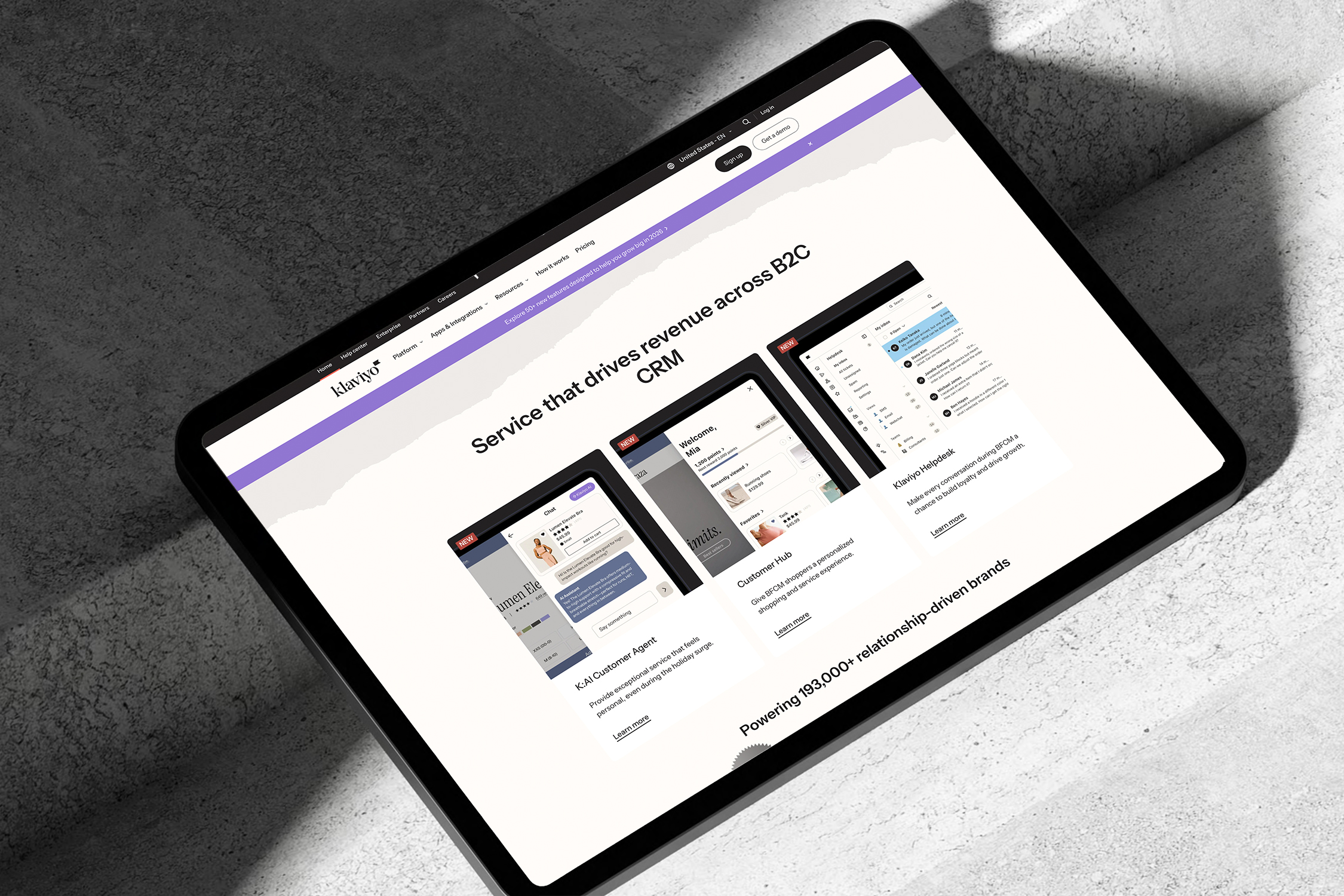
Codeunit works with pre-built integrations for the market’s leading systems for e-commerce businesses. The integrations are built on the OmniConnect platform, and everything is developed according to the best-of-breed principle, allowing you to choose the systems that best suit your needs within each category.
The pre-built integrations available in Codeunit’s portfolio originally started with customer demand. If you request a new integration, the team develops it based on your business needs and then offers the integration as a service. This was exactly the case when Codeunit received a request to send customer data between Business Central and Klaviyo.
“The request to synchronize customer data from Business Central to Klaviyo was something new to me. Most often, companies start using Klaviyo for transactional emails, which means information about specific orders needs to be retrieved from the ERP system. Transactional emails are sent automatically to each user in response to a specific action. This could be an order confirmation, receipt, or shipping notification sent after a purchase. But this customer wanted to send customer data to Klaviyo instead,” says Niklas Degerman, Unified Commerce Architect at Codeunit.
Automatic customer data from business central
The customer who contacted Codeunit is a sports association with several thousand customers. In this case, members and supporters. They use Klaviyo to communicate with their members, which is a very important part of their operations. They asked Codeunit for an integration that automatically retrieves and updates customer data from Business Central to Klaviyo, enabling customer segmentation within the platform. At the beginning of 2026, this functionality went live.
There are several standard connectors on the market for linking Klaviyo with Business Central. For example, apps with preconfigured connections can synchronize data between the systems. These work well when smaller flows need to be connected, without requirements that differ from the standard. However, if your business handles more complex business logic or requires a high degree of automation, you will soon notice that a standard connector is not sufficient.
Segmentation takes place in Klaviyo
“When the sports association mentioned above identified a need for increased functionality, they realized that a standard connector was not enough and contacted us at Codeunit. They already have full control of their customer groups in Business Central, and now that we have built a customized integration, they can handle the segmentation of their customers directly in Klaviyo. For example, they can easily send a niche email to youth members when they turn 18, or target their messaging to members who have annual passes,” says Björn Holthe, Unified Commerce Architect at Codeunit.
The importance of analyzing the flow
When Codeunit receives a request for an integration, they always take the time to understand the customer’s business and listen carefully to their needs, whether they are using a pre-built integration or developing a new one. When Codeunit began working with this sports association, the process looked the same.
It is crucial to gain an understanding of how the data flow should be structured and what functionality the customer expects to achieve. At the same time, the OmniConnect platform is extremely flexible, and there is always room for change and improvement.
Codeunit’s integration naturally works in both directions. It is not only information from Business Central that is synchronized to Klaviyo. There is also important information in Klaviyo that may need to be transferred back to the ERP system. For example, when a member no longer wants to receive communications and chooses to opt out. That information is then sent back and stored in Business Central.
Integration that creates real business value
“We are currently working with a company where we have helped connect Klaviyo to their returns system. When their customer makes a return, it is registered in the returns system. A signal is then sent to Klaviyo, which detects that a return has been made and triggers an automatic email. This happens in an automated flow based on the activities taking place with the return in the returns system. These are the kinds of value-creating activities that a well-built integration can support,” Niklas concludes.